
Editorial
Published in the journal:
Listy klinické logopedie 2026; 10(1): 3
Category:
Editorial
Dear friends and readers of our Journal,
Welcome to the pages of our new issue which, as is traditional for our June editions, is dedicated to articles from various domains of speech and language therapy, and thus bears the title VARIA. You may be surprised to find this edition somewhat slimmed down. This is partly due to our reviewers progressively raising the bar on the erudition of texts received; some articles are accepted by the editorial office but not yet deemed ready to be published. Another reason is that many authors are preparing their texts for the upcoming issue – which will be all the more special, as our twentieth! Indeed, this December will mark ten years since y/our Journal began. We are lining up some interesting novelties for you to mark this anniversary, and more news on that will appear on our Facebook page.
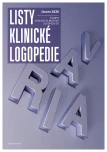
But let me now turn to the editorial photograph, once again by Barbora Lichorobiec, our dear colleague from the editorial board (by the way, one of the upcoming surprises will be specifically to do with her photographs). I tend to reflect on the editorial photo and how it links to our working lives. This image speaks for itself, and I expect everyone can guess why it appears in this particular VARIA issue.
Disparity, diversity, variety – all of this is part of our daily speech therapy work. And one more thing: Imperfection.
A word that is almost taboo in our ‘politically correct’ world nowadays, but let me use it for once, with your kind permission. In recent years, our professional world has been pulled by opposite poles, with healthcare practitioners, educators, parents, relatives, and the patients themselves meandering between them. On the one hand, we perceive a drive toward diversity, variety, tolerance and respect for being different. On the other, there is enormous pressure to do all we can to make our patients as ‘flawless’ as can be – with the rationale that, by doing so, we improve their personal satisfaction and quality of life.
Consequently, parents, relatives, and even the patients themselves frequently hear advice and suggestions from us about all the aspects that could be worked on to make the patient’s life better and more perfect. And since most of our patients have more to deal with than just the one difficulty with which they turn to us, a snowball effect can build up. The end result is not more satisfaction, but a patient or parent/relative who is more overwhelmed, exhausted, and guilt-ridden.
Don’t expect me to offer a solution to this predicament – one we have all found ourselves in during recent years, a situation to which we have brought a whole host of different therapeutic concepts, methods, and procedures. If I had the answer, I would not myself be struggling daily in my work with the internal conflict of what treatment, how much, if at all, I can still advise to a given patient/parent or their loved ones, and when it is simply all too much. How relieved I would be if only I knew the answer…
One thing is for sure, however. Imperfection can be beautiful and enriching. Let us not forget that.
On behalf of the LKL editorial team
Zuzana Lebedová
Štítky
Logopedie Praktické lékařství pro děti a dorostČlánek vyšel v časopise
Listy klinické logopedie
2026 Číslo 1
- Naděje budí časná diagnostika Parkinsonovy choroby založená na pachu kůže
- Efektivita kartáčku Sonicare For Kids u dětí předškolního věku
- Různorodost pomůcek pro aplikaci růstového hormonu si žádá pečlivou edukaci
- Rizikové období v léčbě růstovým hormonem: přechod mladých pacientů k lékařům pro dospělé
- Porucha růstu u 10letého vietnamského dítěte (kazuistika)
Nejčtenější v tomto čísle
- Comprehensive assessment of dysphagia in patients with neurodegenerative diseases
- Effectiveness of vocal fold augmentation on voice quality of patients with unilateral vocal fold paralysis
- Editorial
- Recenze knihy: BDTJ: Baterie diagnostických testů jazyka